



All round
Bruce Lee’s Daughter Slams Quentin Tarantino’s Portrayal of Her Father in Once Upon a Time in Hollywood
Shannon Lee, Bruce Lee’s daughter, has slammed Quentin Tarantino again after the filmmaker ignored criticism of his portrayal of her father in the film Once Upon a Time in Hollywood.
Shannon replied to Tarantino’s statements about her father on The Joe Rogan Experience earlier this week in a guest post for The Hollywood Reporter.
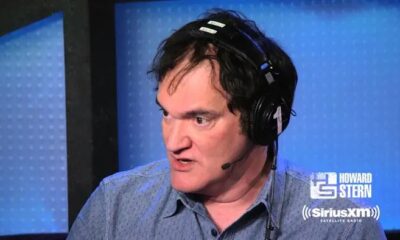
In a recent interview on Joe Rogan’s Spotify podcast, the filmmaker appeared to dismiss the backlash over Bruce Lee’s inclusion, in which Mike Moh’s version of the martial arts legend is easily knocked down by Brad Pitt’s character Cliff Booth in a fight, and claimed that he always knew Lee would take issue with it because “it’s her f**king father.”
“Where I am coming from is I can understand his daughter having a problem with it. It’s her f**king father. I get that,” Tarantino explained. “But anybody else, oh suck a d**k!”
Shannon, 52, was disappointed by Tarantino’s remarks, claiming that the filmmaker had contributed to Hollywood’s perpetuation of her father’s “as a dispensable stereotype.”
Trending:
“If only he’d take the name Bruce Lee off his lips now,” she adds, describing Tarantino’s portrayal of her father in the Oscar-winning film as “inaccurate and unnecessary to say the least.”
“While I am grateful that Mr. Tarantino has so generously acknowledged to Joe Rogan that I may have my feelings about his portrayal of my father, I am also grateful for the opportunity to express this: I’m really fucking tired of white men in Hollywood trying to tell me who Bruce Lee was,” Shannon Lee writes.
Shannon continued, “Why does Quentin Tarantino speak like he knew Bruce Lee and hated him? It seems weird given he never met Bruce Lee, right? Not to mention that Mr. Tarantino happily dressed the Bride in a knock-off of my father’s yellow jumpsuit and the Crazy 88s in Kato-style masks and outfits for ‘Kill Bill,’ which many saw as a love letter to Bruce Lee. But love letters usually address the recipient by name, and from what I could observe at the time, Mr. Tarantino tried, interestingly, to avoid saying the name Bruce Lee as much as possible back then.”
Shannon went on to blast “white men in Hollywood” for calling her father “arrogant and an asshole when they have no idea and cannot fathom what it might have taken to get work in 1960s and ’70s Hollywood as a Chinese man.”
“I’m tired of white men in Hollywood mistaking his confidence, passion, and skill for hubris and therefore finding it necessary to marginalise him and his contributions,” she continued.
“I’m tired of white men in Hollywood finding it too challenging to believe that Bruce Lee might have really been good at what he did and maybe even knew how to do it better than them.”
“And while we’re at it, I’m tired of being told that he wasn’t American (he was born in San Francisco), that he wasn’t really friends with James Coburn, that he wasn’t good to stuntmen, that he went around challenging people to fight on film sets, that my mom said in her book that my father believed he could beat up Muhammad Ali (not true), that all he wanted was to be famous, and so much more,” Shannon continues.
In prior interviews, Lee slammed Tarantino’s portrayal of her father, calling it “disrespectful” and “a mockery” of his legacy.
Shannon wrote in her latest article, ““Look, I understand what Mr Tarantino was trying to do. I really do. Cliff Booth is such a badass and a killer that he can beat the crap out of Bruce Lee. Character development. I get it. I just think he could have done it so much better. But instead, the scene he created was just an uninteresting tear-down of Bruce Lee when it didn’t need to be. It was white Hollywood treating Bruce Lee as, well, white Hollywood treated him – as a dispensable stereotype.”
She observed that in a time when Asian Americans “are being physically attacked, told to ‘go home’ because they are seen as not American… I feel moved to suggest that Mr Tarantino’s continued attacks, mischaracterisations and misrepresentations of a trailblazing and innovative member of our Asian American community, right now, are not welcome”.