















All round
Why Dustin Hoffman refused to promote his 1969 hit Midnight Cowboy
Despite being considered so disturbing and sexually raw with heterosexual and gay s-x, gang rape, prostitution, and drug use that most film companies were unwilling to touch it, the 1969 blockbuster Midnight Cowboy was the first X rated picture to win the Academy Award for Best Picture.
Times were changing, with “the motion picture industry in deep trouble, ticket sales steadily falling for more than two decades and studios sliding towards insolvency,” as Pulitzer Prize-winning journalist Glenn Frankel writes in his new book, “The Motion Picture Industry in Deep Trouble.”
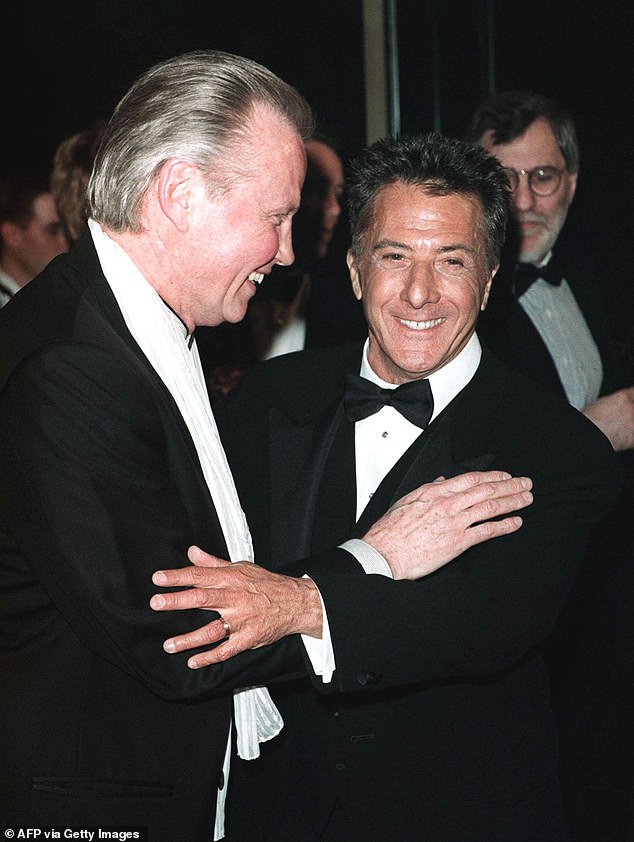
The X-rating of the picture starring Jon Voight as Joe Buck and Dustin Hoffman as Ratso had little effect on its box office performance following its premiere in May 1969.
But, alas, an enraged Hoffman refused to promote the picture because he was afraid it would kill his career after watching people walk out of a screening in New York. Hoffman was dissatisfied with the part and was still irritated thirty years later.
Trending:

Even the film’s British director John Schlesinger asked his star, Jon Voight, ‘Do you really think anyone’s going to pay money to see a movie about a dumb Texan who takes a bus to New York to seek his fortune screwing rich old women?’
With the Vietnam War and the assassinations of Martin Luther King and Robert F. Kennedy, it was a tumultuous period.

According to the author, New York was on the verge of a seemingly irreversible fall, ushering in dark and inventive experimentation in pop culture, cinema, art, literature, theater, and music.
Dustin Hoffman grew concerned that the sexually raw grittiness of Midnight Cowboy and his part as Ratso Rizzo, the cowboy’s pimp, counselor, and buddy, would signal the end of his acting career after appearing in the smash picture The Graduate in 1967.
Dustin Hoffman sexually harassed 17-year-old assistant
2017
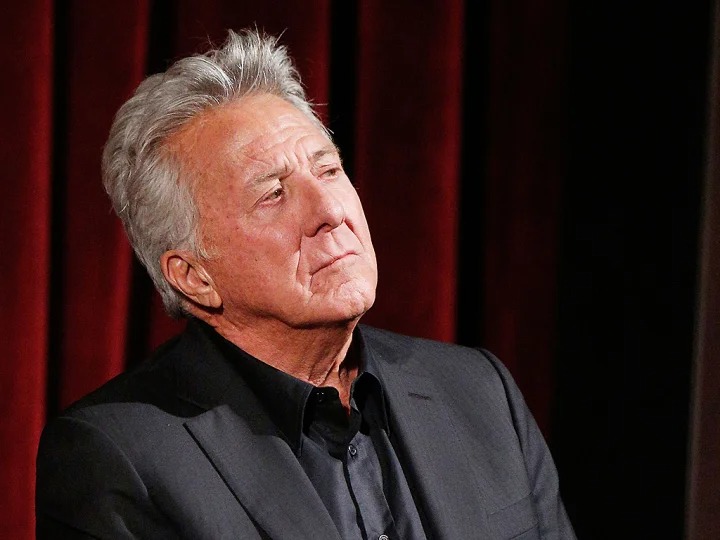
Lars Niki/Getty Images for The Academy of Motion Picture Arts & Sciences
The wake of the Harvey Weinstein scandal has resulted in some stunning Hollywood discoveries. S-xual misconduct charges have long been thrown under the rug in Hollywood, and the wave has inspired more and more individuals to come forward with revelations about powerful figures like filmmaker James Toback, actor Kevin Spacey, and director-producer Brett Ratner. Another name was added to the list recently: Dustin Hoffman.
Anna Graham Hunter, now 49, claims she worked as a production assistant on Death of a Salesman, a 1985 TV movie that garnered Hoffman his first and only Emmy, when she was 17 and a senior in high school.
Hunter published notes she wrote as a teenager outlining what happened on the sets during the five weeks she was there in an article for The Hollywood Reporter.
Hunter has mixed feelings about the actor. In her op-ed, she said, “I loved the attention from Dustin Hoffman. Until I didn’t”
Hunter stated in the Hollywood Reporter, “He asked me to give him a foot massage my first day on set; I did. He was openly flirtatious, he grabbed my a**, he talked about s-x to me and in front of me. One morning I went to his dressing room to take his breakfast order; he looked at me and grinned, taking his time. Then he said, ‘I’ll have a hard-boiled egg … and a soft-boiled clitoris.’ His entourage burst out laughing. I left, speechless. Then I went to the bathroom and cried.”
In a diary she addressed to her sister at the time, Hunter documented Hoffman’s alleged abuse of her during her five weeks on set. “Today, when I was walking Dustin to his limo, he felt my a** four times,” she wrote. “I hit him each time, hard, and told him he was a dirty old man.”
Hunter stated her feelings towards Hoffman are mixed now, noting that she liked him before meeting him and still enjoys viewing his films, but that she no longer excuses his conduct.
“Whenever I talk about this, I sense that my listeners want a victim and a villain. And I wish my feelings were as clear as theirs. I would be more comfortable if I felt nothing but revulsion for a man who had power over me and abused it,” she explained.
“At 49, I understand what Dustin Hoffman did as it fits into the larger pattern of what women experience in Hollywood and everywhere,” she said. “He was a predator, I was a child, and this was s-xual harassment. As to how it fits into my own pattern, I imagine I’ll be figuring that out for years to come.”
Hoffman said in response to the piece: “I have the utmost respect for women and feel terrible that anything I might have done could have put her in an uncomfortable situation. I am sorry. It is not reflective of who I am.”
Hoffman was undoubtedly at the pinnacle of his career in the mid-’80s, although his reputation has been questioned in the past. During the making of the 1979 Oscar-winning picture Kramer vs Kramer, he admits to slapping co-star Meryl Streep to aid with her believability. He allegedly taunted Streep during shooting, according to her.